
The Phone Is the Problem. What If It Could Be Part of the Solution?
I’m 73, and I know my relationship with my phone isn’t entirely healthy.
My wife and I will be watching television. She gets up to use the bathroom. I pause the show, put on my glasses, and reach for my phone. She’s barely left the room.
Or I’m unloading the dishwasher and she walks into the kitchen, spots her phone, picks it up, and stops. Completely absorbed. She’s standing right in my way, so I give her a gentle nudge to get past.
It’s funny because it’s familiar. It’s also a little unsettling.

If two adults in their 60s and 70s can have trouble resisting a phone, what are we asking of children whose ability to manage impulses is still developing?
The phone is built to invite another look
Phones aren’t simply tools we pick up when we need them. They bring messages, entertainment, social connection, and new things to look at throughout the day. Many apps also make it easy to keep going: a swipe brings the next video, recommendations fill the next moment, and notifications offer another reason to check.
That doesn’t mean every app is harmful, or that every person who checks their phone often has a problem. It does mean that children, and adults, are trying to manage their attention in an environment full of invitations to spend it.
A 2023 Common Sense Media study tracked smartphone use for a week among 203 U.S. young people ages 11 to 17. In that group, the median daily phone use was nearly four and a half hours, and the median number of daily notifications was 237. Those numbers don’t describe every teenager, and they don’t tell us whether each minute was useful or harmful. They do give a sense of how often a phone can be part of a young person’s day.
Researcher Gloria Mark’s work on attention is often summarized with another striking series of numbers: the average time spent on one screen before switching was about 150 seconds in 2004, 75 seconds in 2012, and 47 seconds in more recent workplace observations, with a median of 40 seconds. But those studies looked at adults working at computers. They measured switching between screens, not a universal human attention span. The settings and methods also differ, so the numbers shouldn’t be treated as proof that everyone’s attention is shrinking.
Still, the question behind the figures feels familiar: when a device makes the next thing so easy to reach, how do we help ourselves, and our children, stay with the thing we chose to do?
A habit isn’t automatically an addiction
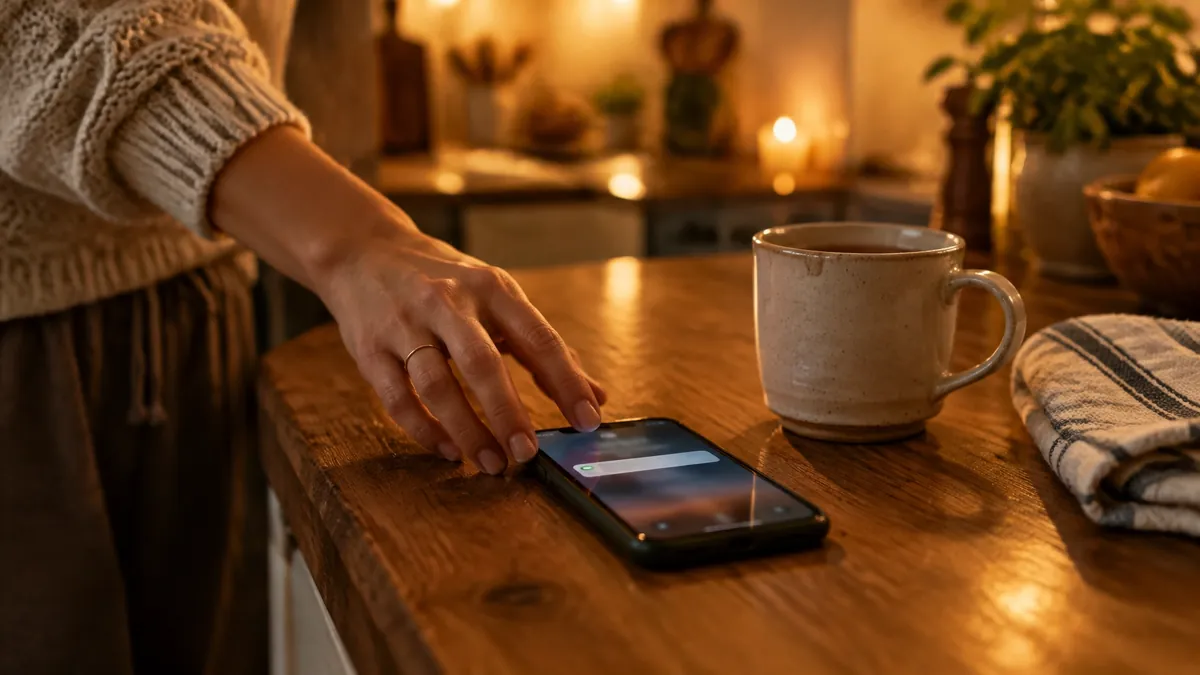
I want to be careful about the words we use. Habitual checking is common. Problematic smartphone use is a term researchers use when someone’s phone use is difficult to manage or gets in the way of parts of daily life. That’s different from saying a person has a clinical addiction.
A number of studies use questionnaires to measure problematic use, but a high number of checks, or a lot of screen time on its own, doesn’t establish a diagnosis. What matters is the wider picture: is phone use repeatedly displacing sleep, school, relationships, or responsibilities? Is the young person struggling to stop, even when they want to?
The research is still developing, and children’s experiences vary. I don’t think we help families by turning every phone habit into a crisis. But we shouldn’t dismiss the challenge either.
A different role for the phone
That tension is what led me to create Unbusted.
A blocker app is like a prison guard. Unbusted is like a self-help coach.
That’s a deliberately sharp comparison, not a claim that every blocker is bad. Sometimes a clear boundary is exactly what a family needs. But I kept wondering whether we could do something different: instead of only taking the device away, could we repurpose it to help a student practice focusing?
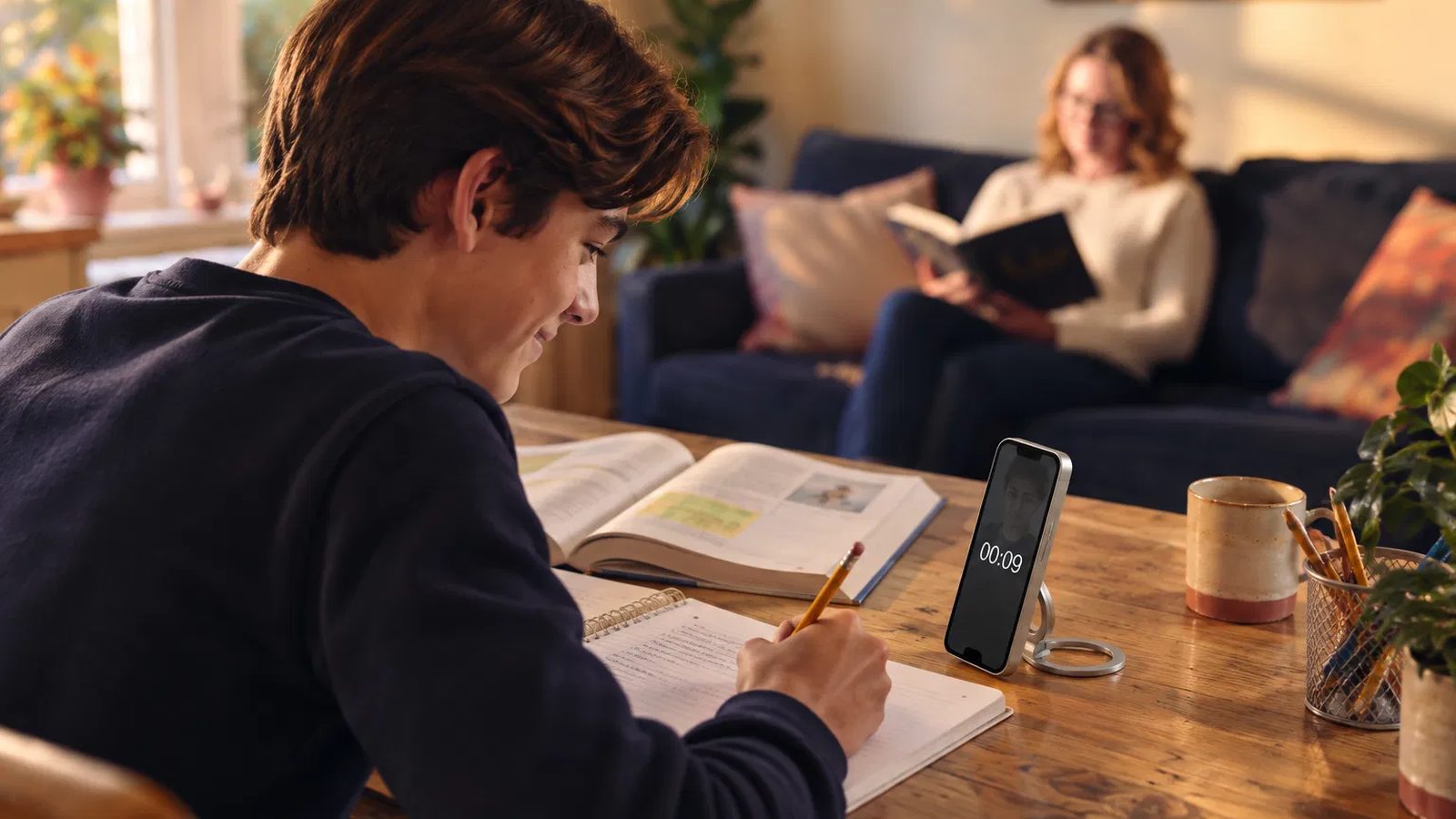
During an Unbusted focus session, the student’s live camera image fills the phone screen, darkened so the focus timer, session information, and controls remain clear as overlays. The student sees themselves working, while gentle reminders can help them return to the task.
The camera checks for the student’s face on the device. The video isn’t recorded, stored, or streamed to a parent. After the session, a parent can enter a secure PIN on the child’s phone to see a log with details such as focus time, pauses, and reminders.
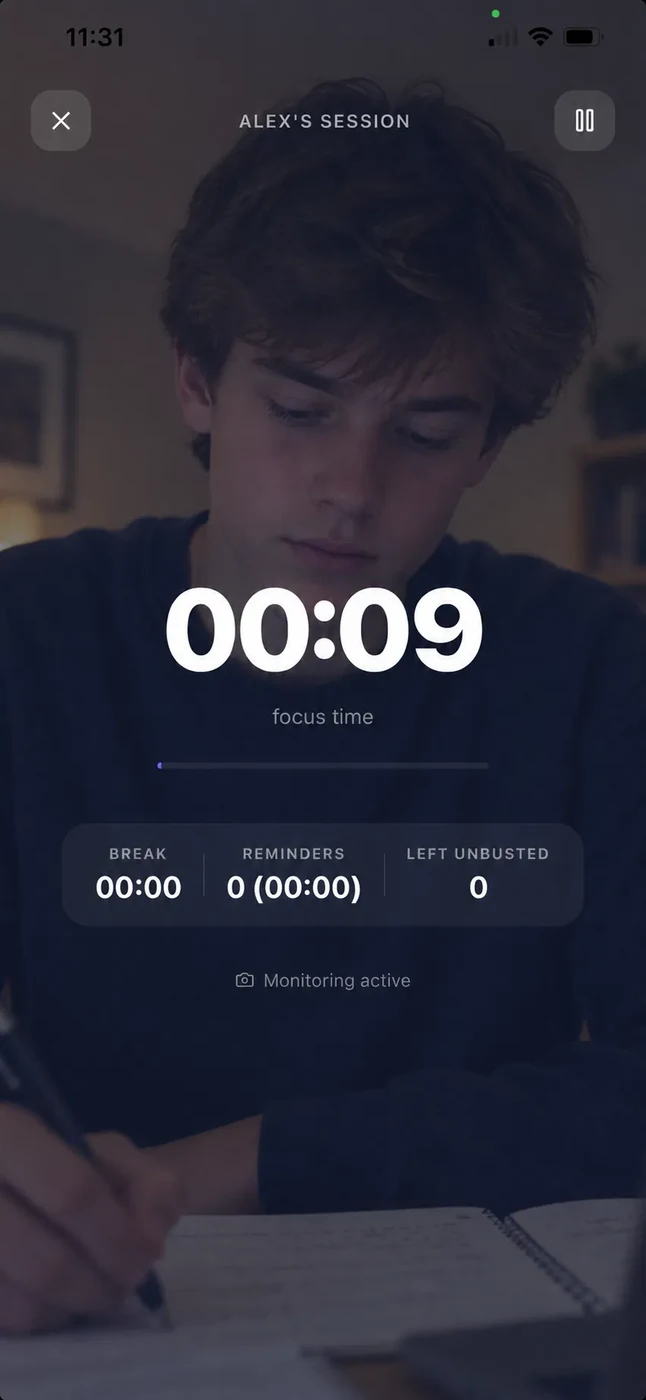
Here’s the distinction I want to make plain: we’re exploring whether seeing themselves during a focus session can help young people practice self-awareness and self-regulation. We haven’t scientifically demonstrated that it does. And the app can’t tell whether a student is doing the right assignment or understanding it. It’s a tool for practicing a routine, not a measure of a child’s character or ability.
Homework is only the beginning
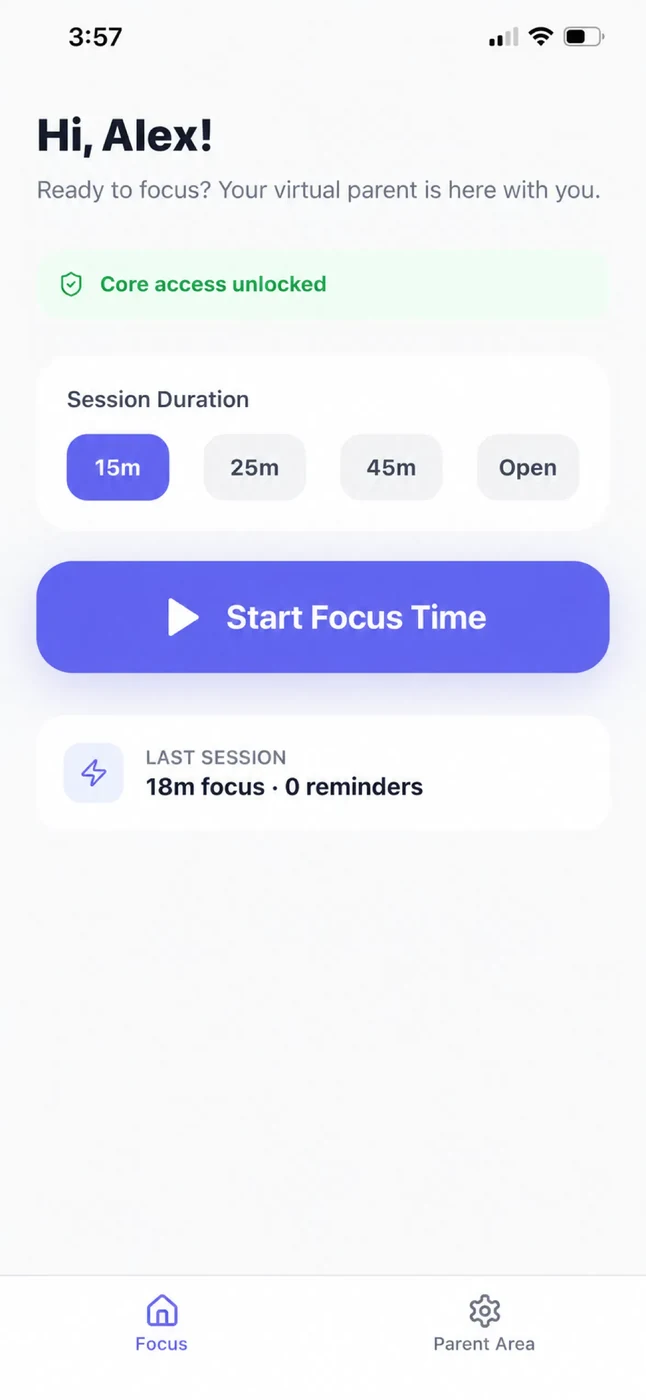
Homework is a natural place to start because families often feel the phone-distraction struggle there. A student can choose a session length, begin working, and have a reminder when they drift away.
But I picture the idea reaching beyond the homework table. A student finishes an assignment, carries the same phone to the piano, and starts a 30-minute practice session. The phone that might have pulled them into scrolling becomes part of the routine that helps them practice.
That’s the possibility I find interesting, not because one app can solve the larger challenge, but because small, repeated choices may help children learn to notice when their attention has wandered and choose where to bring it back.
One step toward independence
Children are growing up in a world where many products and platforms compete for their attention. We can’t remove every distraction, and we can’t make every decision for them forever. We can help them learn to recognize what’s pulling at them, make a choice, and return to a goal they care about.
That’s the idea behind Unbusted: turn the device competing for a child’s attention into a tool for reclaiming it. Rather than fighting the phone, we repurpose it. Rather than policing the child, we help them practice self-discipline.
One focus session, one child, one step toward independence at a time.
I’m Lane Yago, founder of Unbusted. I’d love to hear about your family’s experience. What helps your child focus? What hasn’t worked? And what have your children taught you about attention, technology, or independence? Share your thoughts in the comments, and subscribe if you’d like to keep exploring these questions with me.
This publication will look beyond homework and beyond one app. I’ll be writing about raising independent, self-disciplined children in the age of digital distractions, and the everyday family relationships that shape how we get there.
Lane Yago | Founder, Unbusted
Scene illustrations on this page are AI-generated.
What if the phone causing the distraction could help solve it?
Meet Unbusted—the focus coach that helps students practice self-discipline using the phone they already own.
Download on the App Store