
How to Help Kids Build Self-Discipline During Homework Time
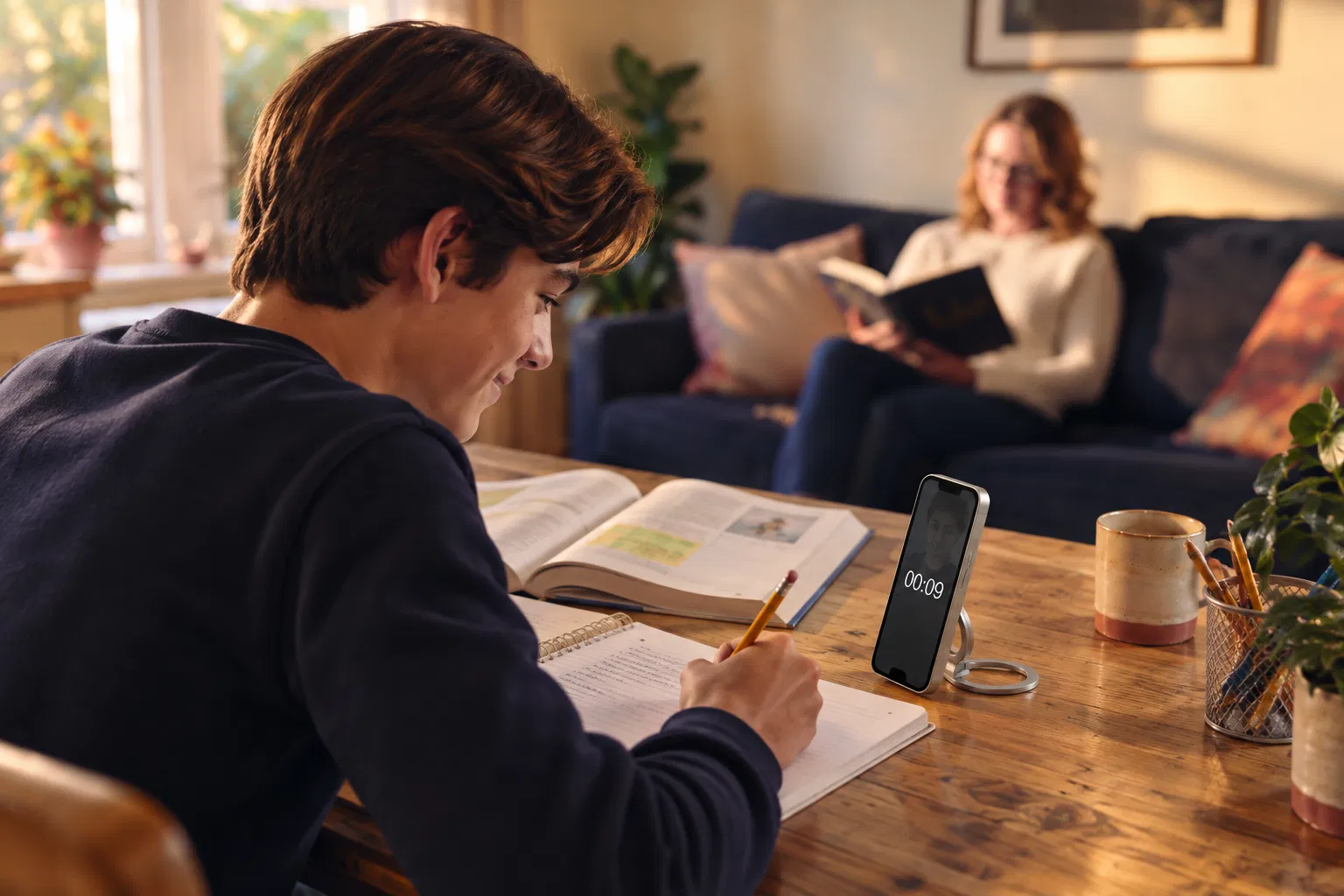
Self-discipline isn't something kids either have or don't have. It's a skill they can practice: deciding what to work on, getting started, noticing when they drift, and returning to the task.
That takes time. And during homework, a phone can make practice harder. But taking it away isn't the only option. With a plan your child helps shape, their phone can become part of a routine that supports focus and independence.
What research says about phones and homework
A 2021 survey of 135 students at four U.S. high schools, published in Education Sciences, looked at teenagers' phone use during homework. The students reported being distracted about 38% of the time. The researchers estimated that could add up to roughly 204 hours in a school year spent trying to do homework while distracted.
The study also found that 64% of teens felt they should focus more than they currently did. About two-thirds believed phones hurt their concentration.
But the findings weren't simply "teens want their phones taken away." Around 65% of families had no rules about phone use during homework. And among students whose families did have rules, only about 30% said they always followed them.
When asked about possible strategies, students were most open to silencing their phone (87%) or keeping it nearby but out of sight (80%). Fewer were willing to turn it off (about 56%) or put it in another room (about 52%).
These responses don't prove that one strategy works for every child. They do suggest a useful starting point: involve your child in choosing a realistic plan, rather than relying on a ban they may not stick with. Read the full study by Mrazek and colleagues.
You can also find the full text on ERIC.
A simple routine to build self-discipline
Try these steps for a week, then adjust together. The aim isn't a perfect homework session. It's helping your child practice a routine they can gradually manage on their own.
1. Agree on a small, clear goal
Before homework starts, ask your child what they'll work on first. Help make the goal specific: "Finish the first five math problems" is easier to begin than "Do math."
For a younger child, you might help break a large assignment into smaller parts. For a teen, try letting them set the goal and tell you when they expect to finish. The more ownership they have, the more the plan feels like theirs.
2. Let your child choose a phone plan
Talk about what tends to pull their attention away. Is it message alerts? The urge to check a social app? Picking up the phone without thinking?
Then agree on one change to try. They might silence notifications, turn the phone face down nearby, or place it just out of reach. Start with an option your child is willing to use. If it isn't enough, discuss what to try next.
A helpful question is: "What would make it easier for you to stay with your work tonight?" That keeps the conversation focused on building a skill, not catching someone doing something wrong.
3. Make the start easy
A consistent place and a few minutes of preparation can make it easier to begin. Clear a spot at the table, gather books and supplies, and decide what needs to be done. If background noise or other devices are a distraction, adjust the space where you can.
You don't have to make the area perfect. You're helping your child create a familiar starting routine: sit down, get ready, begin.
4. Choose a work period and a break
Some kids do better when they know when they can pause. Agree on a manageable period of work, followed by a planned break. It could be 15 minutes for a younger student or 25 minutes for a teen. Whatever feels like a reasonable first step.
Use a timer if it helps. When the break ends, make returning to the assignment part of the plan. Over time, your child can try longer work periods or choose their own schedule.
5. Coach with calm, brief check-ins
You don't need to watch every minute. A check-in can be as simple as, "How's your plan going?" or "Are you stuck, or ready to keep going?"
If your child gets distracted, try to avoid turning the moment into a lecture. Help them notice what happened and choose their next step: "Looks like that message pulled you away. What do you want to do now?" Returning to work is practice, too.
6. Notice the effort, not just the finished assignment
Point out specific actions your child took: getting started without a reminder, keeping the phone out of sight, asking for help, or returning after a break.
Try: "You noticed you'd drifted and got back to the assignment. That's the skill we're working on." Specific praise helps your child see what they did well, and what they can repeat next time.
Turn the phone into part of the plan
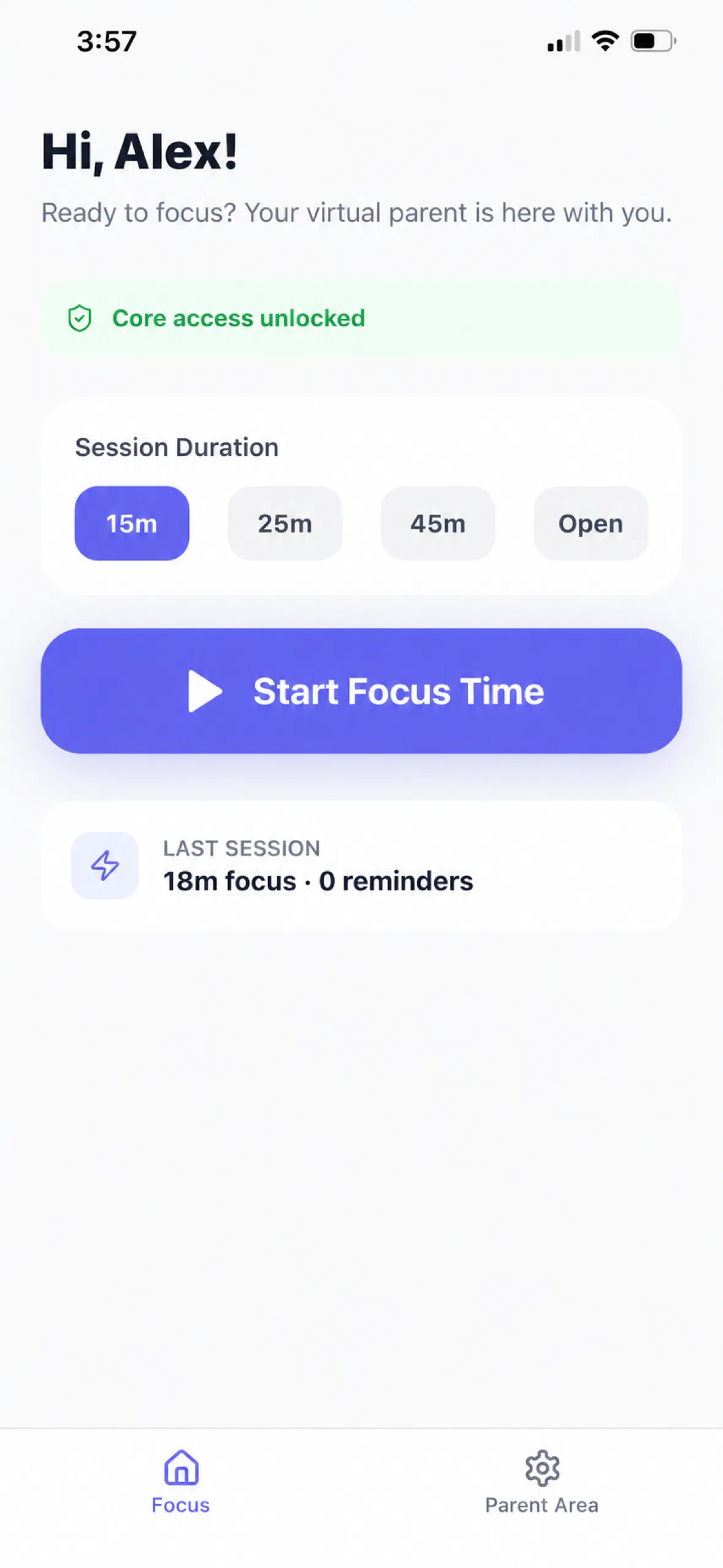
For some students, the phone can help make a homework routine more concrete. They can choose a session length, start a timer, and keep the goal visible. That doesn't mean the phone is always helpful, or that every child needs an app. A paper timer and a written plan can work well, too.
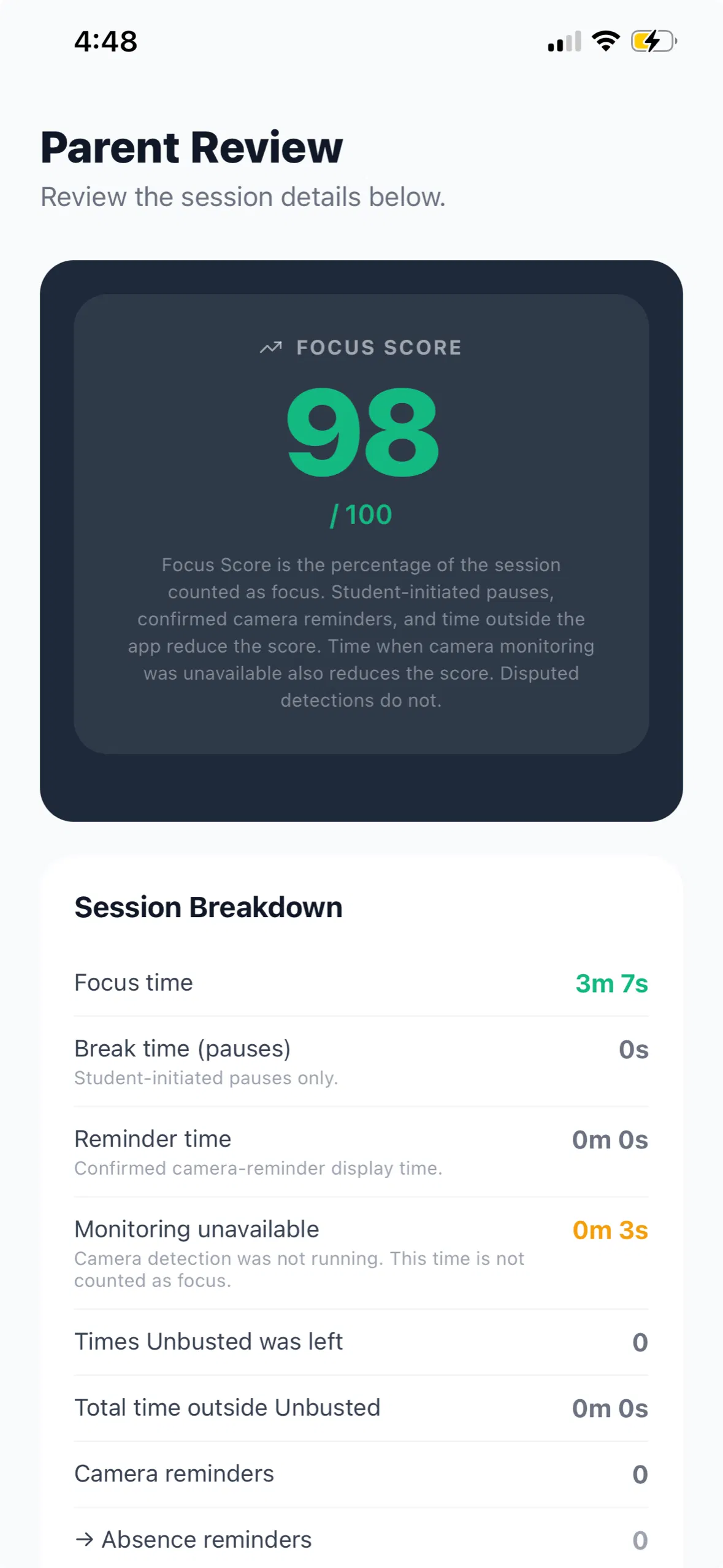
Unbusted is designed around this kind of student-led practice. A child chooses a focus-session length on their own phone. During the session, the app can send gentle reminders if they step away or leave the app. A parent can use a secure PIN on that same phone to review a session log, including focus time, pauses, reminders, and time away.
The boundaries matter: activity stays on the child's phone rather than syncing to a separate parent dashboard. During an active session, the app's camera runs, but no video is recorded or streamed to a parent.
Rather than putting parents in the role of constant monitor, Unbusted puts students in front of themselves. During each focus session, their own live camera image fills the screen, with the focus timer and session information overlaid. They can literally see themselves working, creating an opportunity for greater self-awareness and, potentially, stronger self-regulation. It's a concept we believe is worth exploring as students begin using the app. Unbusted is available for iPhone in the U.S. You can Download Unbusted on the App Store.
Free for 7 days, then $39.99 once. No subscription.
Review the plan, not the child
At the end of the week, take a few minutes to talk about what helped and what got in the way. Keep the focus on learning:
- Which phone plan was easiest to follow?
- Was the work period too long, too short, or about right?
- What helped your child get back on task?
- What would they like to try next week?
If the routine didn't go smoothly, that's useful information, not a reason to label your child as lazy or undisciplined. The assignment may have felt overwhelming, the break may have been hard to end, or the phone plan may need adjusting. Try changing one thing at a time.
The American Academy of Pediatrics also recommends a regular homework spot and routine, while encouraging parents to let children take responsibility for their work. You can read its practical guide to developing good homework habits.
A few common questions
Should I take my child's phone away during homework? Not automatically. Some children may prefer to put it in another room; others may do better with it silenced and out of sight. Ask what they're willing to try, then review whether it helped.
What if my child doesn't follow the plan? Talk about what got in the way and adjust the plan together. Make the next step small enough to try again. If distractions keep making homework difficult, ask your child's teacher whether workload, assignment difficulty, or another concern might be part of the picture.
How long does it take to build a homework habit? There's no set timeline. Focus on repeating a manageable routine, not getting every session right. Gradually step back as your child gets more comfortable starting, staying with the task, and returning after distractions.
Self-discipline isn't obedience. It's independence.
Self-discipline grows through small decisions and repeated practice, not through one perfect homework night. Let your child help shape the plan, keep expectations clear, and notice the moments they take responsibility. Little by little, you can move from managing every step to encouraging them as they manage more on their own.
Here's the thing worth sitting with: our kids are growing up in a world deliberately engineered to compete for their attention. We can't eliminate every distraction, and honestly, we shouldn't try. What we can do is help them build the skills to notice when something is pulling at them, decide what matters, and return to their goals. That's not a lesson about phones. That's a lesson about life.
I'd love to hear from you. What's working in your house? What isn't? And what have your kids taught you about focus, attention, or growing up in a world full of screens? Share your experience in the comments, or reply wherever you're reading this, and if you'd like to keep the conversation going, follow along wherever this is published.
Lane Yago, founder of Unbusted
What if the phone causing the distraction could help solve it?
Meet Unbusted—the focus coach that helps students practice self-discipline using the phone they already own.
Download on the App Store